The Missing Ingredient in Pacing
Feb 18, 2026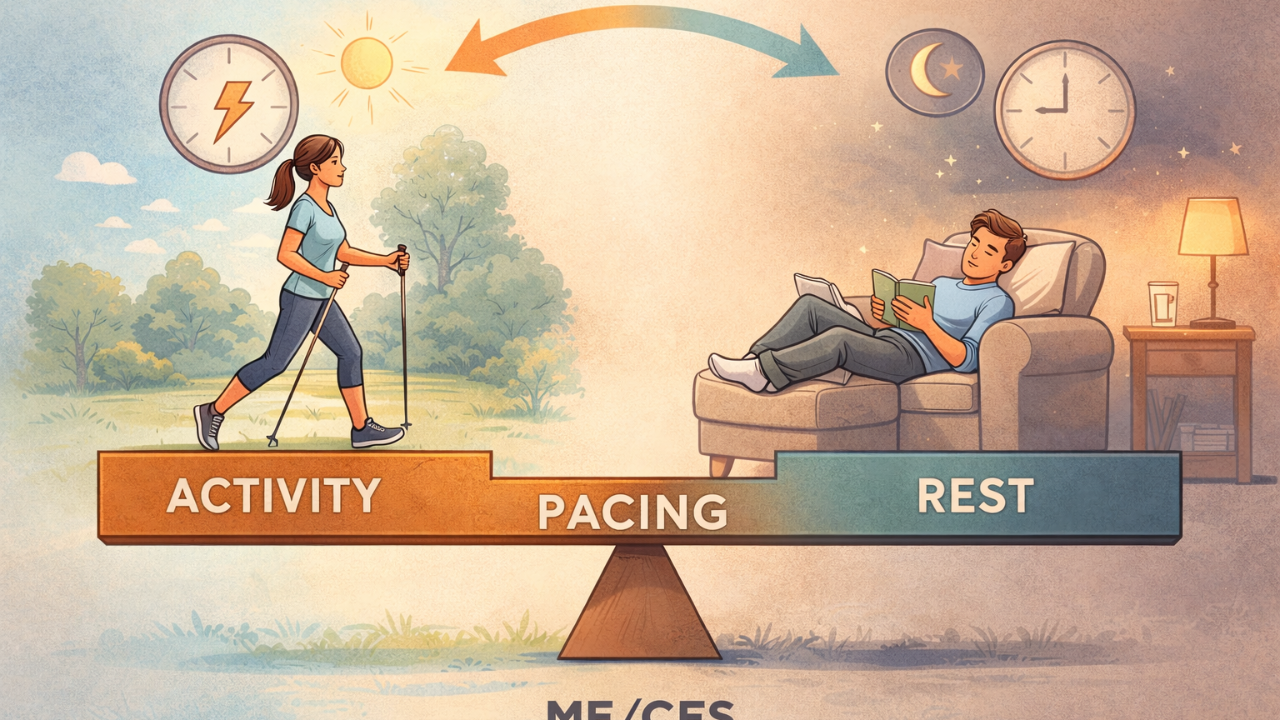
So, there I was.. lying in bed in the dark in the middle of the day. It was the spring of 2021, though the seasons meant very little to me during that time. I was ankle deep in a FB group, struggling to look at the screen, when I came across the word pacing for the first time.
I’d been undiagnosed and mild with ME/CFS for three years, until my complete lack of pacing caused me to crash into a new, severe baseline. My symptoms had exploded; dozens of new ones I didn't even know were possible to have. Now, surrounded by people who had lived with this illness longer than me, I was learning the rules of what I thought was the pacing game.
The rule it seemed, was simple: I was to avoid post-exertional malaise at all costs. And I mean, honestly? Given what I'd been through (which was freaking hell on earth), that advice made a lot of sense at the time.
PEM was horrifying, intense, and deeply destabilizing to me. I had already learned the hard way, that repeated crashes can lower one's baseline — but what I did not know at the time, was that it is not the symptoms themselves were not dangerous. The the boom or bust pattern was creating the decline.
Still, for me — and for most — pacing quickly became synonymous with extreme caution.
(And If that doesn't resonate with you, it's probably because you haven't experienced a crash that you can't come out of and get back to baseline yet. (and I sure hope you never do).
The true meaning of pacing
When you are learning how to stop the "boom or bust cycle", this kind of careful pacing is often necessary. And by careful, I do not mean hyper-vigilant; I just mean more calculated.
But this is only a stage of recovery to move through; not a place to remain stuck. Because if you pace this way long enough, you will likely come to the same confusing conclusion I did:
You can pace as carefully as humanly possible — and still not get better.
That is what happened to me. I learned how to pace very carefully and it seemed for the most part, I could contain the crashes and remain somewhat stable.
But after a while, I learned an important distinction, one I feel is rarely explained, and one that changed everything for me.
Pacing to cope and pacing to recover are not the same thing.
This is why so many people come into my program telling me they already know how to pace — that they've been pacing well for years - only to realize they were missing critical pieces around pacing to recover.
What is pacing to cope?
Pacing to cope is about preservation. Maintaining your baseline.
Minimizing crashes.
Conserving energy.
Surviving day to day.
Pacing to cope can certainly quiet the waters of stormy crashes — but only until the next storm of life hits you, and so, it does very little to strengthen the boat.
This approach can even backfire on you by creating MORE sensitivity to activity, through the act of depriving the nervous system of it altogether.
When pacing becomes only about avoiding PEM, symptoms, and stimulation, it can quietly train the nervous system to interpret any and all demand put on it as danger.
Instead of becoming more resilient, the system becomes even more fragile.
And here's the thing: even with absolutely perfect pacing, life will eventually push you outside your baseline:
You'll have to go to a medical appointment.
A caregiver or spouse will bring home a virus.
You'll experience emotional stress from the death of a loved one.
This is the reality of being human, and no amount of pacing can replace nervous system capacity when push comes to shove.
So here’s the key point:
If pacing is only designed to preserve your current baseline, every deviation from that baseline can quickly become a crisis.
Read that again. Memorize those words. Cause' beautiful soul - they're golden.
So then... what is pacing to recover?
Pacing to recover is what I teach in my program "The Edison Effect". It involves micro-expansions — small, intentional increases in activity introduced when the system is relatively stable, followed by observation and rest.
We stabilize, we intentionally contract, we stabilize, we intentionally contract again, we stabilize again.
We do not push ourselves. We press gently against the baseline, only ever so slightly.
We do not override symptoms. We listen to them as messengers, and adjust appropriately.
We do not gaslight ourselves. But we do not hyper-vigilantly approach activity, ether.
Micro-expansions are the opposite of GET - they teach the nervous system that a little more is safe, so that over time, resilience returns and baselines slowly expand. You learn when to expand, when to contract, when to plateau, and when to level up again.
Honestly my friend, there is so much more to say here about how to approach effective pacing —especially around how to respond to symptoms in the process - but I don’t want to ask you to go beyond your baseline to read more today.
So I will just say this:
If this reframing around pacing resonated, I have two free webinars that explore this shift more deeply:
• How to Stop the Boom–Bust Cycle
• How to Pace with the Rhythm of the Cosmos
I hope you take a minute to check them out!
It's been three years since I got well - and pacing is the blueprint by which I've built my life. I don't pace now to recover (that part is behind me), but I DO pace to strengthen and deepen recovery.
I want the same for you. And for every MECFS warrior. So I’ll just keep lighting the way.
If you're in need of guidance, support, have questions or are curious about recovery, and want to learn more about The Edison Effect MECFS Recovery Program, you can access my 9 free webinars by clicking the link below!
Let's Connect!
Receive notification for open enrollment periods for The Edison Effect, as well as carefully curated guidance, insights of living/loving & healing from Anj by joining her newsletter.
We hate SPAM. We will never sell your information, for any reason.